Chủ Nhật, 20 tháng 1, 2008

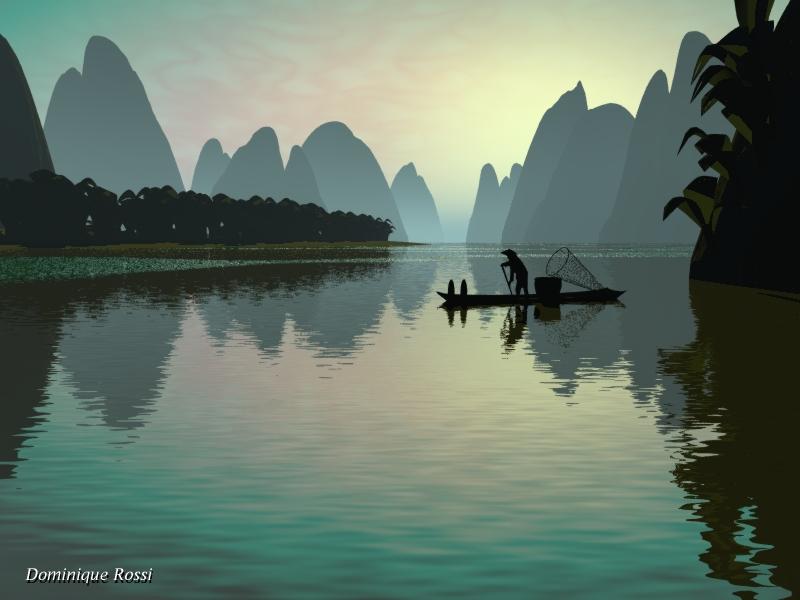
Ba Be Lakes - Bac Can province


Ba Be itself is actually three smaller lakes joined together – Pe Lam, Pe Lu and Pe Leng. The climate is cool with an average temperature of 22?C. The best time to visit the area is during the dry season, which is during winter and spring.

Ba Be Lakes lie in the middle of a vast limestone mountain range of Ba Be District, in Bac Kan Province, 200km north-west of Ha Noi – dubbed a "precious jade of Viet Nam" and one of 500 lakes recognised as worthy of attention. Ba Be Lakes area has a lot to offer, including waterfalls, rivers, valleys, lakes, and caves all set amidst picturesque landscapes. Ba Be Lakes, located 145 meters above sea level, are among the largest natural lakes in Vietnam with a total surface area of 500 hectares. The area was established as a national preserved forest and tourist center in 1978.

Ba Be Lakes are surrounded by many ancient trees, from which several varieties of precious wood are obtained. Up to 30 animal species such as wild pigs, bears, panthers, monkeys, and birds inhabit the area.

The surface of the lake was tranquil – a beauty spot if ever there was one, in this land of so much beauty. Visitors will have an unforgettable stay in the mountains by the lakes, enjoying sightseeing boat trips, hikes, and water sports. From Ba Be, tourists can visit other neighboring scenic attractions such as Dau Dang Fall, Puong Cave, and Tien Pond.

Passing by Puong Cave (30m high, 300m long), cruise past the villages of Tau, Cam and Hua Tang, and navigate your way through the river’s forks and brooks, you will reach Dau Dang Falls.

Catch your breath: it’s worth it. They fall, they drip, they cascade. Take your pick of superlatives. Take your pick of times of day for paying a visit. The falls laps over 1,000m on three levels, each bursting with energy from the mountains that help fuel them. "Silver cataracts" one travel writer said. And he was't wrong.


Reach us at:

Trafest

Michael Cherito - + 84.903454427. Email : trafest@trafest.com


www.trafest.com


A famed beauty spot at the meeting point of two rivers - Bac Can Province


There is a strange irony to the tale of the small but famous temple of Cho Moi hamlet. The temple, which sits at the base of a mountain and on the confluence of two rivers, is named after a fierce warrior, the Young Lady Tham, commemorating her bloody resistance against northern pirates in the 19th century.

Yet the site of the temple is so tranquil, so serene, that a visitor would hardly believe it was a memorial to vicious battle.

The only resonance with those past times is in the violent rush and roar of the two rivers meeting during the wet season, when they create whirling, forceful eddies and powerful currents.

It’s an idyllic scene. The busy hamlet lies in Bac Can Province, on the stretch of Highway 3 that runs from Thai Nguyen City to Bac Can Town, and is a focal point for several land and shipping routes.

But behind the village is the Truong Bia Range, standing motionless, silent, eternal, like a solid green rampart protecting the hamlet to its west.

At the town’s north and east stand several majestic and pensive rocky outcrops, overgrown with thousands of years worth of patient green moss.

From among them soars the peak of Quan Thung, distinguished by its thick and extensive cover of lush forest.

The mountain is home to valuable hard-wood trees such as lat hoa and nghien, and precious animals like the yellow monkey and pheasant, which are becoming increasingly endangered due to hunting.

The Den Tham, or the Temple of the Young Lady Tham, stands at the foot of the still and quiescent Quan Thung peak, hidden under the cliff and the luxuriant tree canopies.

Its origins are unknown. Elders in the area say it has been there many generations. In its early days, it was simply a small shrine to the elements around it, a place to worship the God of the Mountains and the God of Water.

From there, devotees could watch as, during the wet season, overflowing forest streams poured into the two rivers and transformed them into heaving, seething beasts.

At the point where the two rivers meet, Quan Thung stands in their path, forcing them to change direction. Here, deep and dangerous whirlpools are created right at the foot of the mountain. Countless unlucky boatmen have been capsized by these unruly, swirling currents.

The violent, roaring rivers and the stillness and tranquillity of the mountain are what draw crowds to this temple, now considered as both a sacred and impressive place.

The temple is no longer a pantheon to the gods of nature, however, as it is now devoted to Nang Tham.

Records still kept within the temple recount how the young lady led the local people against the Black Flag troops. These warriors were Chinese peasants, led by Liu Yung Fu into rebellion against the Qing Dynasty in the 1880s. But when they came to Viet Nam, they resorted to piracy.

Like so many other Vietnamese resistance fighters before and after her, the clever and talented lady general took advantage of the difficult terrain in the area to outwit her enemy and inflict many bitter defeats on the Black Flag troops.

She was killed in fierce fighting and the sorrow, mingled with respect, of the local people prompted them to devote the temple to her and worship her memory.

Cao Thi Phuong, the 84-year-old keeper of the temple for the past three-and-a-half decades, says that when she was a small girl the temple was large and imposing, and famed for its holiness.

But time took its toll, and the temple fell first into disrepair and then into decay. In 1994, donations from local people and believers around the country allowed the temple to be repaired and rebuilt.

Den Tham is only its popular name. Formally, it is known as Thuong Tham Linh Tu (Sacred Elevated Temple in the Cave) and occupies a special position in the spiritual life of the local people.

The temple is built in the Dinh architectural style, and laid out in such a way that it has room for altars to worship gods, saints and Buddha under the same roof. This is known as the Tien thanh hau phat (saint up front, Buddha in the inner section) style, in the Tam giao dong duong (co-habitation of the three beliefs) spirit.

The temple serves as a reminder of the old Vietnamese sayings that "when drinking water, remember its source" and "in eating the fruits, think of he who planted the trees." Translation: be grateful to those in times past who devoted themselves to the nation and its people.

This temple’s collection of marvellous statues serve as a reminder of this philosophy. At the forefront are statues of the Second and Third Mandarins, who are believed to keep watch over the temple, and of the three Holy Mothers of the Sea, Forest and Sky.

Behind them is a statue of the holy saint Hung Dao Dai Vuong, also known as Generalissimo Tran Quoc Tuan, the national hero who defeated the invading Mongol-Yuan forces in the 13th century.

In the innermost part of the temple is a figure of Kwan yin with six pairs of arms in different positions. He is revered as the protector of people living on the ocean shores and river banks, keeping them safe from strong waves and winds.

The temple also contains the usual array of indispensable tools of worship such as incense-burners and drums with handles.

There are also horizontal boards and parallel scrolls inscribed with Han scripts praising the pagoda’s beautiful surrounds and the great merits of the gods and saints to whom the temple is devoted.

Next to the main building is a small concrete shrine devoted to Nang Tham herself, and on the left is a simple temple to worship the God of the Mountains.

The buildings and their courtyards and grounds are enclosed within a protective canopy of trees and foliage, and are nestled into the mountain’s base.

The picturesque setting and wonderful landscape is drawing increasing numbers of tourists and religious devotees.

They’re attracted by its present day beauty and serenity.

More with Trafest

Michael Cherito - + 84.903454427. Email : trafest@trafest.com

www.trafest.com


But never lose sight of its once in lorious past.

Land issues delay tourism projects


Construction of several tourism projects in the central city of Da Nang is bogged down by land clearance and compensation issues, cumbersome administrative procedures and budgetary limitations, according to the deputy director of the city's tourism department, Nguyen Dang Truong.

To date, the city has granted licences to 16 tourism projects worth a combined VND10.8tril (US$676mil); Of these, eight are foreign-invested with a total capital of $473mil, while the remaining are domestic-invested to the tune of VND3.24tril ($202mil).

The city has also given in-principle approval to 26 tourism projects with a combined budget of VND15.58tril ($974mil), including a $150mil urban area, $80mil high-grade tourism resort and $30mil shopping and entertainment complex.

Only five of these projects are operational, however, while the pace of construction on 11 others remained sluggish, Truong acknowledged.

To address the problem, the tourism department recently asked the municipal People's Committee to the licences of three slow-moving projects worth a combined VND800bil ($50mil), including the Red Star Hotel and Resort developed by the Hanoi-based Sao Do Joint Stock, Co and Khang Hung Hotel financed by the Khang Hung Joint Stock Co.

The department has also proposed city authorities offer suitable investment incentives to several major investors who have the financial capacity to carry out the projects.

www.trafest.com
More information please mail: trafest@trafest.com

Quang Ninh approves tourism project in Van Don


Van Don Economic Zone in the northern province of Quang Ninh will have a 300-hectare tourism complex worth US$112mil as the provincial government just approved the project last Friday.

Vu Nguyen Nhiem, chairman of the provincial government, told the Daily that he signed the investment certificate, allowing the 167 Joint-Venture Co., Ltd. to develop the luxury tourism complex.

It is the biggest tourism project licensed into Van Ron since July when Prime Minister Nguyen Tan Dung agreed to develop Van Don District into an economic zone.

He said the investor would develop many tourism facilities in the complex including a 27-hole golf course, a five-star hotel of 15 stories, villas for rent, resort area, and an outdoor concert area among others.

Nhiem said during 42 months, the investor, which is a Vietnam-U.S. joint venture, would build major works for the complex such as the golf course and the hotel. It is also seeking permission from the Prime Minister to build a casino section there.

Van Don Economic Zone covers the entire precincts of Van Don District with the total area of 2,200 square kilometers, and comprises 600 islands and islets in Bai Tu Long Bay of Quang Ninh Province.

Nhiem said some tourism projects have been licensed into the zone but most of them are of small scale. Currently, some investors are surveying the investment potentials in the zone.

The provincial, government will work with the National Institute for Urban and Rural Planning under the Ministry of Construction to organize a contest to seek the best ideas to make an overall planning scheme for Van Don Economic Zone.

"We have established an organizing committee and will launch the contest soon to call for foreign and local consultants to contribute the best ideas for the zone's development," Nhiem said.

Thứ Năm, 17 tháng 1, 2008

HA LONG BAY CRUISE 1 DAY

HA LONG BAY CRUISE 1 DAY

Breakfast at hotel. 08 AM at hotel private car transfer to Halong Bay for day cruise with a cafe stop-over, arrive for embarkation at 11:45 AM, Bai Tho junk. Seafood Lunch on board. Afternoon enjoy cruising in Halong Bay to sightsee amazing limestone rock formations: Fighting Cock islet, Teapot, Human Head islet, and visit a wonderful cave of stalagmites and stalagtites. Sunbathe, swim. Afternoon transfer back to Ha Noi, arrive at hotel at 07 PM.

TOUR COST IN $ US

Group

1

2

3 - 6

7 - 20

21 - 40

Price

178

102

75 - 46

51 - 35

32 - 23


INCLUDES : Travel insurance, private car, private boat, guide, admission fee, seafood lunch

EXCLUDES : Personal expenses, tip, services not mentioned.

Reach us at:

Trafest

Michael Cherito - + 84.903454427. Email : trafest@trafest.com

www.trafest.com


Thứ Tư, 16 tháng 1, 2008

Sapa Easy Trek

Sapa Easy Trek

Price: $399 (included taxes & service charge)
Route: Hanoi - Sapa
Duration: 2 days/3 nights
Depart from: Hanoi
Return to: Hanoi
Situated at an elevation of 1,650 meters and overlooking Fansipan (Vietnam's highest mountain at 3,143 meters), Sapa can have all four seasons in one single day. The weather changes rapidly; in the morning it can be bright and sunny but within minutes, clouds can appear and the rains begin to fall. It is where you find the beauty of nature in valleys, mountain, streams, water falls, and the warm welcome of the ethnic peoples. Come to Sa Pa to enjoy the scenery and explore daily activities of the tribal peoples.
Night: Hanoi - Lao Cai
At 08:30 pm our tour guide will pick you up at hotel lobby to go to the Hanoi railway station for the night train to Sapa. Sleep on the train.

Day 1: Sapa - Cat Cat Village (D)
Train arrives at Lao Cai Railway Station at 06.00 am, transfer to Sapa by bus. Have breakfast at hotel or in the local restaurant (optional). Relax. Your guide will meet you at hotel for a short walk downhill to Cat Cat village. This village of H'mong tribe in the valley which remains very generally unaffected by outside influences. Excellent views of the valley, the magnificent limestone and paddy fields of H'mong village. Enjoy some visits to local families and reach their customs. After the village and further down into the valley, the Cat Cat waterfall will be visible. A "White curtain" cascade appears, within a flowery valley and deep-green pines. The rocks near the river and waterfall provide a marvelous place for picturesque photos and sunbathing during good weather…
Have dinner at a local restaurant. Then discover Sapa in night, see ethnic people's activities and life in Sapa.

Day 2: Sapa - Ta Van Village (B, L)

Breakfast before private jeep transfers you to Lao Chai village, a village of Black H’mong. A short walk down to the river to visit hill tribe house to see their living style and the local women making their handicraft and clothes. Further on along the road, the Ta Van village where the Dzay people live can be seen. Visit the village and learn their customs. Return to Sapa in the afternoon for a hot shower; relax before returning to Lao Cai railway station by bus for the night train back to Hanoi. Stay overnight on train.


Day 3: Hanoi
Train arrives around 06am; tour finishes at railway station. Return to your hotel on your own.
Tour Price starting $ 399
Trip includes:
  • All transfer & transport
  • Accommodation at Sapa hotel – 3 star hotel
  • Meals as mention in the itinerary (B- breakfast, L- Lunch, D- dinner)
  • Return train ticket Hanoi- Lao Cai- Hanoi (soft sleeper with air- condition, 4 berths)
  • Local ENG speaking tour guide
  • Entrance fee & permission to visit the hill tribe village

Trip excludes:

  • Travel insurance
  • Pre-post accommodation in Hanoi
  • Other meals & drinks
  • Admission fees during free time
  • Personal expenses such as shopping; telephone, laundry and bar bills etc.
  • Tips and gratuities
  • All other service not made on the written form
Scenery of Sapa

Sapa

Cat Cat Village

Ta Van Village

Emotion Vietnam

Price: $854 (included taxes & service charge)
Route: Hanoi-Sapa-Halong-Hue-Da Nang-Hoi An-Ho Chi Minh City-Mekong Delta
Duration: 16 days/15 nights
Depart from: Hanoi
Return to: Ho Chi Minh City

This is the comprehensive alternative to our previous trip and shows you Vietnam in close-up, from top to bottom. It's not just a change of direction - this trip packs another adventurous week into the itinerary. We'll explore Hanoi, Halong Bay and visit the hill tribes of Sapa and colourful Bac Ha market before slowly making our way south along stunning coastline to Ho Chi Minh City, the vibrant City and the mighty Mekong Delta.

Highlight: Boating, trekking and cultural experiences

Day 1: Arrive in Hanoi
Upon your arrival at Noi Bai Airport, you will be picked up and transferred to a hotel in Hanoi. Ha Noi, Vietnam's capital, is a stylish and gracious city that retains a unique old world charm and has some of Asia‘s most striking colonial architecture. The many lakes and parks make for a relaxing atmosphere. If time permits, you can enjoy a short cyclo excursion through the bustling old quarter streets named after the specific goods once offered for sale at these places. Accommodation at your hotel in Hanoi.

Day 2: Hanoi City Tour (B, L)
8:00 AM: pick up at your hotel and go to the Ho Chi Minh Complex to visit the Ho Chi Minh Mausoleum, Ho Chi Minh Museum and One Pillar pagoda. Continue the tour and visit the Literature temple, which was the first University in Vietnam built in the 16th century. The tour continues to the Art Museum. Enjoy lunch in one of the famous restaurants in Hanoi before commencing the walking tour in 1000 Years Old Hanoi Old Quarter. At 4pm we go off to see the unique Water Puppet show. Stay over night at your hotel in Hanoi.

Day 3: Hanoi - Halong (B, L, D)
8:00 AM: Transfer to Halong City for a boat cruise on the Bay, stop along the way to admire the landscape and take photos. At Halong City board the Huong Hai Junk and check in for registration. The friendly boat screw will provide you with a special seafood lunch with welcome drink during boat cruise around the bay. You will explore the islands and take in the fantastic views of the picturesque scenery. There are some 3,000 limestone islands rising amazingly from the clear and emerald water. The limestone karsks (formations) are littered with beaches, grottos and beautiful caves. Along the way we will anchor for a leisurely swim in a secluded cove and a discovery visit to one of those hidden grottos beneath towering cliffs. Have dinner on board with Vietnamese wine and later rock gently to sleep on the boat.

Day 4: Halong - Hanoi - Lao Cai Railway Station (B, L)

After breakfast, you can relax on deck to soak up the the beauty of the bay while passing the most beautiful of karsks islets like Man’s Head Island, Tortoise Island. Visit Luon Cave by small bamboo boat, Bai Tu Long bay. Have lunch on the boat while you return to Ha Long wharf for private car to transfer you back to Hanoi. At 8:30pm our tour guide will met you at the hotel to escort you to the railway station for the night train to Lao Cai, near the Chines border. Overnight on the train.


Day 5: Sapa - Cat Cat Village (L, D)
Train arrives at Lao Cai Railway Station at 06.00AM. Transfer to Sapa by private van. Have breakfast at the hotel or in the local restaurant (optional). Relax for a while. Your guide will meet you at hotel for short downhill walk to Cat Cat village. This village of the H'mong tribe in the valley, remains in very original style. Excellent views of the valley with the magnificent limestone hills and paddy fields of the H'mong village. Mix with the local families and learn of their customs and social life. Further down past the village down you will reach the Cat Cat waterfall. A "white curtain" cascade appears which is surrounded by a flowery valley and deep-green pines. The rocks near the river and waterfall provide a marvelous place for photos and sunbathing during good weather You will also see a disused French hydro power station. Have dinner at a restaurant and then discover Sapa in night and see the ethnic people and their activities and life in Sapa.

Day 6: Lao Cai - Ta Van Village (B, L)
Breakfast before a private jeep transfers you to Lao Chai village, a village of the Black H’mong. A short walk down to the river will take you to a hill tribe house to see their living style and the local women making their handicraft clothes. Further on along the road, the Tavan village where Dzay people stay can be seen. Visit the village and learn their customs. Back to Sapa in the afternoon. Stay over night at the hotel.

Day 7: Bac Ha Market - Lao Cai Railway Station - Hanoi (B)

Upon leaving Sapa we set off on our scenic drive through the border town of Lao Cai to the colourful Sunday Market at Bac Ha (If time permit). This market also attracts a wide variety of ethnic minority groups including the Variegated Hmong, Dao, Phu La, La Chi and Tay. They still retain their old age cultural traditions and are recognisably distinct from each other by their dress. The experience of this congregation is colorful and unique. After the market we enjoy a walk around the area, visiting the Hmong King’s former residence and Ban Pho where the villagers make the potent local maize alcohol before transfer back to Lao Cai railway station for night train back to Hanoi.


Day 8: Hanoi - Hue (B)

Train arrives back in Hanoi at around 6.00am in the morning. Pick up at the railway station and drive to the Hanoi airport for the flight to Hue. Our tour guide in Hue will greet you at airport for transfer to hotel and learn some history of Old Royal City in Vietnam in 17th century. As Vietnam’s last feudal capital, the small and quiet city of Hue is widely known for magnificent architectures, sculptures, pagodas and royal tombs laid in many small villages and surrounding hills. We spend this afternoon to visit Hue with the massive citadel, which contains the Imperial City and the Purple Forbidden City. This royal residence was all but destroyed during the 1968 Tet Offensive, however it is still fascinating to walk among the ruins.


Day 9: Hue - Boat Trip on River (B, L)

After breakfast at the hotel, we embark on a boat to visit the beauty of riverside pagoda of Thien Mu which now becomes the symbol of Hue and the elaborate royal tomb of Emperor Tu Duc are sights not to be missed. After an impressive boat trip, we return to the town and enjoy a walk to the bustling Dong Ba Market that sells a huge variety of local goods and handicrafts. Along the way we pass by many fantastic eating spots, ideal places for visitors to sample some local delicacies. Stay overnight in Hue.


Day 10: Hue - Hoi An (B, L)

Upon leaving Hue we drive south to Hoi An which was originally a Cham seaport but has been influenced down the centuries by a myriad of traders from various cultures. The scenic road is hugging the coastline before crossing over the winding Hai Van pass. A view from the top of the pass is one of Vietnam’s most impressive panoramic scenes. We stop en route to visit the Cham Museum in Danang City, the China Beach and the Marble Mountain, whose peaks represent the five elements of the universe. Accommodation at hotel in Hoi An.


Day 11: Hoi An (B)

The ancient architecture of Hoi An is a fascinating combination of Vietnamese traditional characters with Chinese and Japanese influence.
There is plenty to see in this delightful town, some of the attractions are the famous Japanese Covered Bridges, the Pottery Museum, the 200 years old Tamky House, the Chua Ong Pagoda, the vibrant market.
Today we include some of these on a walking tour past many low tiled houses scattered along the small streets and assembly halls which reflect the town's multi-cultural past. A perfect way to round off the day is a boat trip on the Thu Bon River, which also gives us a chance to admire the spectacular countryside and explore a handicraft ceramic village and boat building yards.


Day 12: Da Nang - Ho Chi Minh City (B)

An early transfer to Danang Airport for a short flight to Ho Chi Minh City, still called Saigon by many locals. This bustling metropolis, contradiction of its northern counterpart, is crowded with motobikes and cars, and has numerous shopping areas and sidewalk cafés. The sightseeing tour of Ho Chi Minh begins with a visit to the Reunification Palace which was the former residence of the President of South Vietnam until end of April 1975. Close to the palace are some striking French colonial structures including the Notre Dame Cathedral and the Old Sai Gon Post Office. We also visit the Jade Emperor Pagoda and the War Remnant Museum before continuing to the bustling Ben Thanh Market where everything and anything is for sale!


Day 13: Cao Dai Temple - Cu Chi Tunnels (B, L)

The head quarter of Cao Dai sect is located in Tay Ninh. This religion was founded in 1923 and now numbers over 2 million members. After breakfast we travel by roads to Tay Ninh to see the ornate temple of Cao Dai and attend the fantastic mid-day service when the followers fill the hall wearing colored robes, a symbol of the curious combination of the Confucianism, Taoism and Buddhism. Then transfer out to explore the Cu Chi Tunnels, an incredible underground network of approximately 200 km constructed by Vietnamese fighters during the long struggle for independence. The tunnels contained hospitals, plus accommodation and schools, and were used as a military base for the Vietcong in the American war. Back to Ho Chi Minh City. Overnight at hotel.


Day 14: Ho Chi Minh City - Mekong Delta (B, L)

Breakfast at hotel. This morning we travel by road to the small town of Cai Be in the heart of the Mekong Delta. From here we will board our boat and take a cruise around the tributaries of the mighty Mekong River.
On the way we visit some local cottage industries, including the puffed-rice and rice paper makers, bonsai nurseries and fish farms as well as exploring a floating market. Each boat usually sells one particular item, whether it be pumpkins, pineapples, sugar cane etc, and in order that the customer knows where to shop, they hang that item from the highest part of the boat. From here we head out into the Mekong River itself, a huge expanse of water. The Mekong River begins its life in Tibet and travels 4,500 km through six countries before eventually flowing into the South China Sea. Our lunch will be on the banks of one of the many canals that interlace the area, and will include the very tasty 'Elephant ear fish'. After lunch we continue to weave our way through the intricate network of canals. The canals carry everything from human cargo to huge rice barges and are the lifeblood of the Delta. Traveling by boat gives you a unique perspective of life here and later we can even navigate some of the narrower canals by small rowing boats. Overnight in Can Tho.


Day 15: Mekong Delta - Ho Chi Minh City (B, L)

Heading out of the town, we travel by roads to the Mekong Delta, Vietnam's largest rice bowl. On arrival in My Tho we embark on a boat navigating around the intricate small canals in the delta region, which is a great way to observe the local lifestyle close-up and catch a view dotted by many islands. The exciting excursion will pass the lush green vegetation before arriving at the famous Unicorn Island. Here we the opportunity to stroll around an orchard, taste many seasonal fruits and enjoy wonderful traditional music. The next stop of our trip is Ben Tre Province to visit some fascinating local industries. After feasting on a huge lunch we return to Ho Chi Minh, stopping off along the way to see the beautiful Ving Trang Pagoda and the Cho Lon, Saigon’s Chinatown, which is crammed with sacred temples and mysterious, narrow lanes.
Accommodation at hotel in Ho Chi Minh City


Day 16: Ho Chi Minh City - Departure (B)
Free at leisure until time to transfer to the airport for the flight back home.

Class

Number of Person in Group/Pax
Tour cost per Person (in $US)

1

2

3 - 7

8 - 11

12 - 15

16 up

Single Supplemental


1521

1261

923

878

854

325


1972

1712

1474

1329

1305

475


2478

2253

2084

2067

2060

825


gui mail.gif